
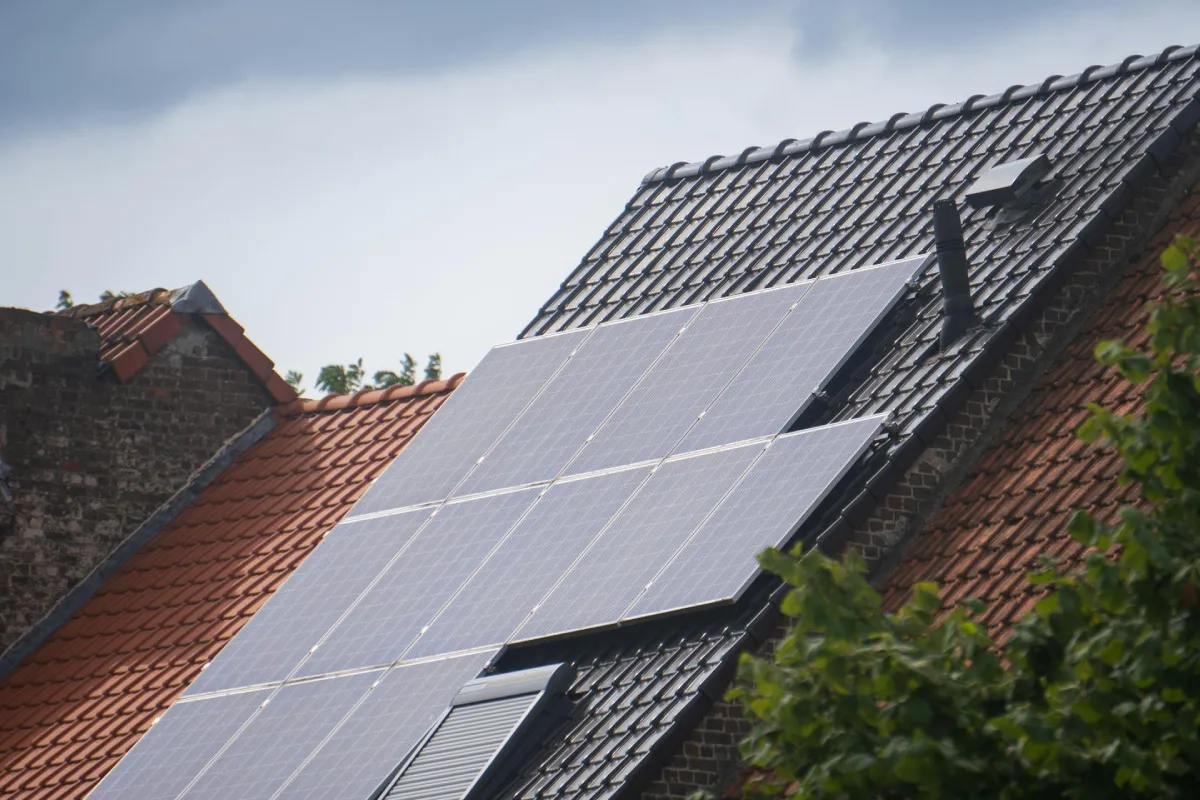

Most solar guides are still stuck in 2024, promising a 30% tax credit that, under current law, has phased out for most residential purchase structures after December 31, 2025. In 2026, the game has changed. With the end of the 25D residential credit, solar panel ROI now depends on N-Type TOPCon efficiency and understanding how the Section 48E third-party ownership structure works.
Based on current market data, panel performance trends, and evolving incentive structures, here’s what homeowners should understand about which monocrystalline solar panels offer the strongest long-term value in today’s solar landscape.
Key Takeaways
- The New Incentive Strategy: The 30% federal residential purchase credit has largely phased out under current law. To potentially access similar savings today, homeowners may use Third-Party Ownership (Leases/PPAs) via the Section 48E pathway.
- The Tech Gold Standard: Consider installing N-Type TOPCon monocrystalline panels. See our expert guide on the 7 Best Solar Panels for Home to find the top-rated models using this technology. They offer the highest efficiency (22%+) and the lowest degradation, ensuring your system actually lasts 25 years.
- Performance Over Price: Monocrystalline beats polycrystalline in every metric—it produces more power in less space and handles summer heatwaves without a massive drop in output.
- Immediate Construction: If you’re going the lease/PPA route, consider starting your project starts before the July 4, 2026 deadline to lock in current rates before new sourcing restrictions kick in.
- ROI Focus: With federal buyer credits gone, your ROI now depends on high-efficiency hardware and rising utility rates. Buy for quality to maximize the kilowatt-hours you produce over time.
Table of Contents
- Key Takeaways
- The 2026 State of Solar: Why Monocrystalline Solar Panels are the US Standard
- Monocrystalline vs Polycrystalline
- The Tech Pivot: N-Type TOPCon vs. Traditional P-Type Cells
- The Solar Incentive Shift: Is the 30% Tax Credit Really Gone?
- Calculating Your Real-World ROI Without the Federal Credit
- Installation Checklist: Maximizing Your Monocrystalline Yield
- Common Pitfalls: Don’t Fall for These Solar Myths
- Final Verdict: Is Monocrystalline Still the Smart Move?
- Frequently Asked Questions
The 2026 State of Solar: Why Monocrystalline Solar Panels are the US Standard
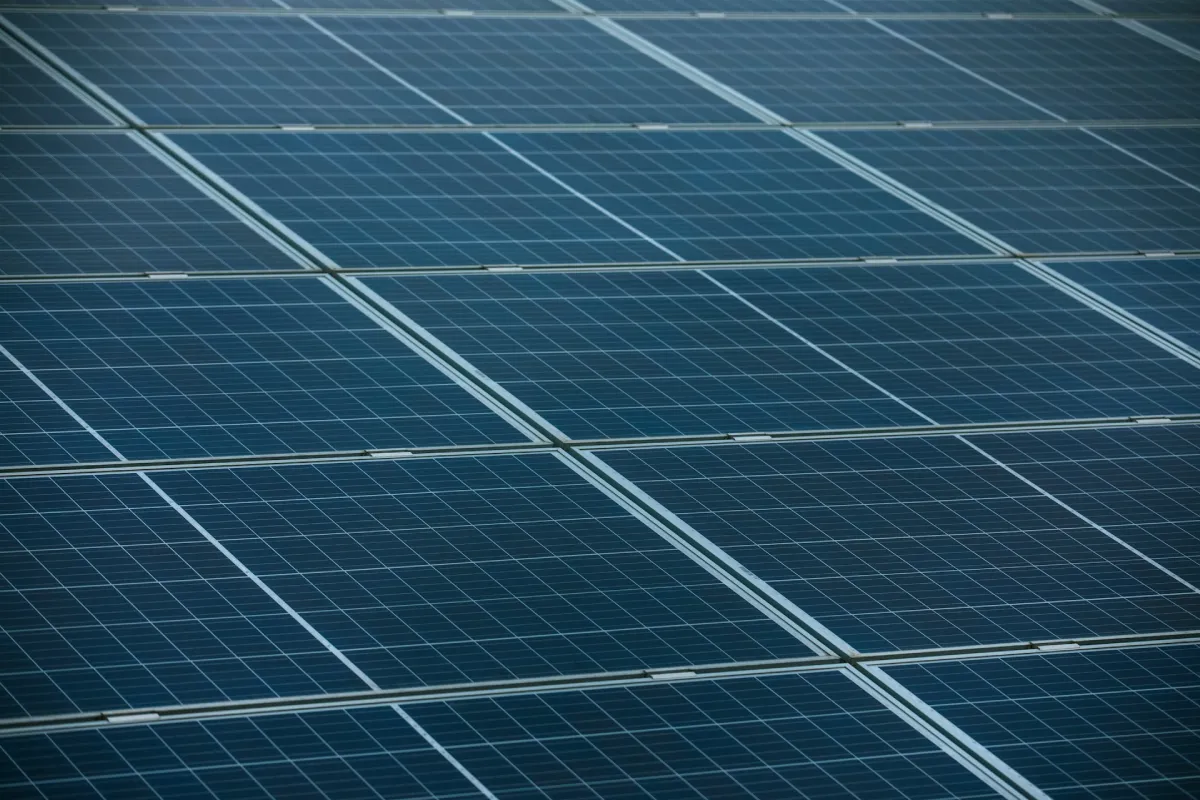
Walk into any solar installer’s office today and ask what they recommend. Nine times out of ten, the answer is monocrystalline solar panels. That’s not a sales pitch. It’s simply where the technology has landed.
Across years of residential installation data and performance comparisons, monocrystalline panels have consistently emerged as the leading choice for American homeowners. They produce more power per square foot. They hold up better in heat. And they look cleaner on your roof.
Here’s why that matters even more now.
Single-Crystal Silicon: The Science of Higher Purity and Electron Flow
The secret is in the name. Monocrystalline means a single crystal of silicon. Electrons flow through a single, uninterrupted structure. There are no grain boundaries slowing them down.
Polycrystalline panels are made by melting silicon fragments together. Those fragment boundaries act like speed bumps for electrons. The result is less power out of the same amount of sunlight.
Think of it like water flowing through a smooth pipe versus a rough, cracked one. Same water pressure, but one delivers more at the other end.
That single-crystal structure is why monocrystalline panels routinely hit 19.5% to 23% efficiency. And it’s why they’re the right foundation for advanced cell technologies like N-Type TOPCon.
Watts per Square Foot: Why Mono is Essential for Limited Rooftop Space
Most American homes don’t have unlimited roof space. You have a usable area — say, 400 square feet facing south — and you need to squeeze as much power out of it as possible.
Monocrystalline panels generate significantly more watts per square foot than polycrystalline ones. A premium mono panel might produce 420–450W from the same footprint where a poly panel tops out at 300–350W.
Over a 20-year system lifespan, that gap compounds. More watts per panel means fewer panels to reach your energy goal, fewer mounting points, and a cleaner installation overall.
The All-Black Aesthetic: Boosting Curb Appeal and Home Resale Value
This one matters more than most installers admit. Modern all-black monocrystalline panels blend into a dark roof. They don’t draw the eye. They look intentional.
Polycrystalline panels have that speckled blue look. It’s not subtle. Homeowners in HOA-restricted neighborhoods or high-value real estate markets consistently prefer the all-black mono look.
Recent market research shows that homes with owned solar panels sell for 5% to 10% more than comparable homes without solar. But that uptick is stronger when the system looks modern and clean. Aesthetics are part of your ROI calculation.
Monocrystalline vs Polycrystalline
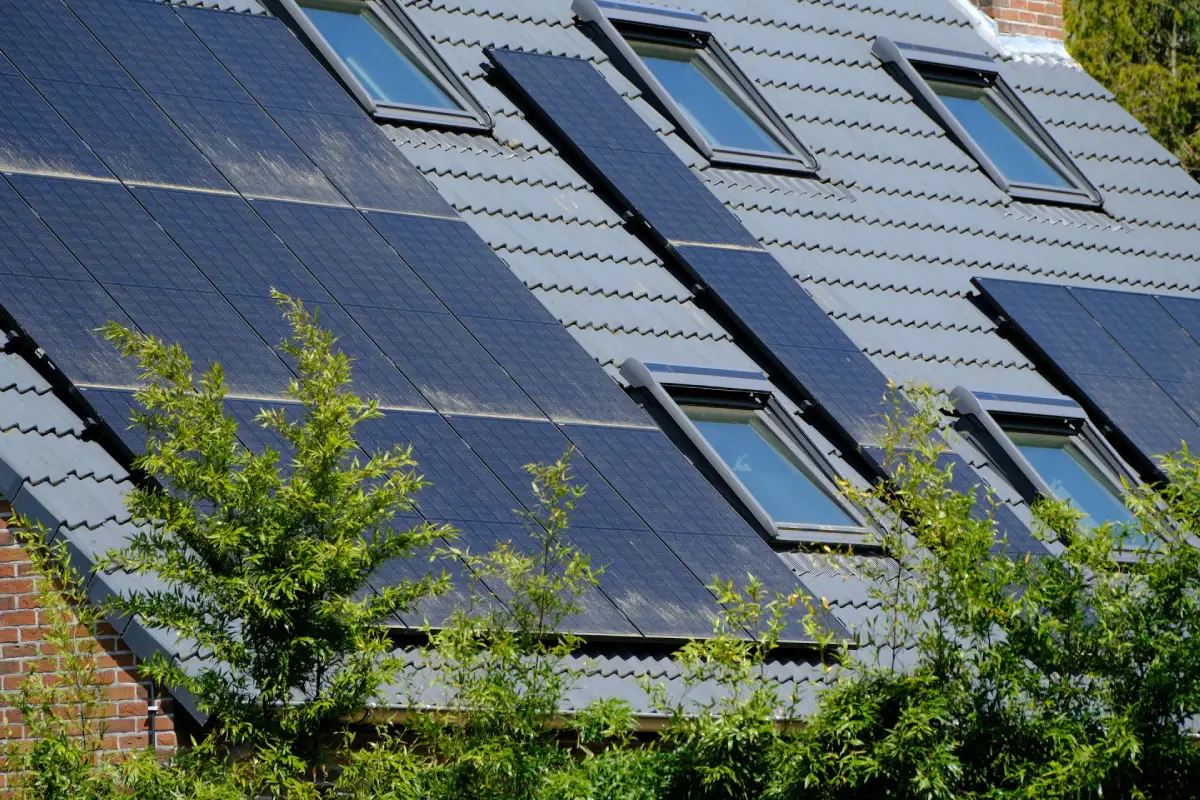
Before comparing efficiency and cost, it’s important to understand how monocrystalline solar panels differ structurally from older technologies.
Let’s put the numbers side by side.
| Feature | Monocrystalline | Polycrystalline |
|---|---|---|
| Cell Purity | Single Crystal (Higher) | Multiple Fragments (Lower) |
| Avg. Efficiency | 19.5% – 23% | 15% – 17% |
| Color / Look | Uniform Black (Sleek) | Marbled Blue (Dated) |
| Heat Performance | Superior (Loses less power) | Inferior (Loses more power) |
| Space Required | Minimal (High power density) | Maximum (More panels needed) |
| 2026 US Market | Dominant Standard | Limited Residential Use |
The table tells the story clearly. But there are a few deeper points worth understanding before you make a decision.
Temperature Coefficient: Why Monocrystalline Wins in Heatwaves
Every solar panel loses some output when it gets hot. That’s just physics. But how much it loses depends on the temperature coefficient.
Premium monocrystalline N-Type panels have temperature coefficients as low as -0.25% to -0.30% per °C, whereas older polycrystalline modules typically lose output at a much faster rate.
Over a Texas summer, that difference determines whether you are producing your own power or buying it back from the grid at peak rates.
The Death of “Blue” Panels: Why Polycrystalline is Now a Budget Risk
Manufacturing trends have shifted so aggressively that polycrystalline panels now account for roughly 0% of new global production according to industry data from NREL and major Tier 1 installers.
Choosing poly to save $200 upfront on a $15,000 system is a false economy. The reduced output and faster degradation in heat will cost you more than that $200 over the first few years.
Decision Matrix: When (if ever) to Choose Poly
In most residential scenarios, polycrystalline panels no longer make practical financial or performance sense. They are increasingly being phased out of mainstream residential offerings in favor of monocrystalline technology. This can make sourcing and long-term replacement options more limited depending on manufacturer and market. Even on a large, unshaded roof, the long-term risk outweighs the upfront savings.
For most U.S. homeowners, monocrystalline panels remain the most practical long-term choice.
The Tech Pivot: N-Type TOPCon vs. Traditional P-Type Cells
Not all monocrystalline panels are equal. The most important distinction is whether the cell is N-Type TOPCon or the older P-Type PERC design.
Why N-Type is the Industry Gold Standard for Low Degradation
P-Type has been the industry standard for decades. It works. But N-Type TOPCon (Tunnel Oxide Passivated Contact) is a meaningful leap forward — and here’s why it matters to your wallet.
N-Type cells have higher efficiency ceilings. They regularly achieve 22%–24% in lab conditions and 21%–23% in real-world installs. More importantly, they degrade slower.
Annual degradation on a quality N-Type panel is typically around 0.3%–0.4% per year. Standard P-Type PERC panels degrade at 0.5%–0.7% per year.
LID (Light Induced Degradation): Protecting Your Investment in Year 1
LID stands for Light Induced Degradation. It’s a power loss that happens in the first hours or days of sun exposure, caused by boron-oxygen defects in P-Type silicon.
Standard P-Type panels can lose 1%–3% of their rated power almost immediately after first use. That’s power you paid for but never actually get.
N-Type silicon doesn’t have the same boron-oxygen defect issue. LID is effectively eliminated. The power output you see on day one is the output you keep.
This is one of the least-talked-about advantages of N-Type technology. Installation performance trends suggest this is also one of the most overlooked factors when homeowners compare spec sheets.
Bifacial Monocrystalline: Can Residential Roofs Benefit from Rear-Side Gain?
Bifacial panels capture light from both sides — the front and the back. The rear side picks up reflected light (called albedo) from surrounding surfaces.
In commercial ground-mount systems, bifacial panels can generate 10%–20% more energy thanks to ground reflection. But residential rooftops are a different story.
On most sloped, shingled roofs, the clearance between the panel and the roof surface is minimal. Reflected light reaching the rear of the panel is very limited. Real-world bifacial gains on typical residential roofs tend to be 2%–5%.
That’s not nothing. But it’s not the headline number you’ll see in marketing materials. If your installer is charging a significant premium for bifacial panels on a standard roof, ask them for site-specific rear-gain modeling first.
The Solar Incentive Shift: Is the 30% Tax Credit Really Gone?
This is the section most solar guides aren’t being straight with you about. Let’s fix that.
The Expiration of Section 25D: Why Buying Solar No Longer Gets You a Credit
Section 25D was the federal residential clean energy credit. It gave homeowners a 30% tax credit on the cost of purchasing and installing a solar system on their primary residence.
Under the currently enacted OBBBA framework, the 25D residential solar credit is scheduled to end for residential buyers after December 31, 2025. If you purchased and installed your system before that deadline, you’re fine. If you’re shopping now, that credit has phased out for most residential purchase structures after December 31, 2025 under current law.
This is a significant change. A 30% credit on a $16,000 system was worth $4,800. That’s real money — and it’s no longer available when you buy.
You can view the Federal Tax Credits: Complete List to see which remaining incentives still apply to your energy upgrades.
It is worth noting that under the OBBBA, standalone battery storage maintains a slightly different phase-out runway than solar-only systems. If you are considering ‘Solar + Storage,’ you can often capture localized grid-service rebates (like California’s SGIP or Tesla’s Virtual Power Plant programs) that help bridge the gap left by the expired federal purchase credit.
The 48E Pathway: How Solar Leases and PPAs Can Still Reduce Energy Costs
Here’s where it gets interesting — and where most guides stop explaining things properly.
Section 48E is the Clean Electricity Investment Tax Credit. This is a commercial-grade credit. And here’s the key: it applies to solar companies and third-party financiers who own solar equipment.
When you sign a solar lease or a Power Purchase Agreement (PPA), you don’t own the panels. The third-party company does. That company can still claim the 48E commercial credit — and they pass the savings back to you through lower monthly rates.
In practical terms, a well-structured PPA may offer energy rates that are often 20%–30% lower than current utility rates, depending on contract structure and local utility pricing. The 30% federal incentive is still flowing through the system. You’re just accessing it differently.
The catch: your installer must begin construction by the July 4, 2026 deadline to lock in the full 30% credit tier without triggering more stringent Foreign Entity of Concern (FEOC) compliance requirements. After this date, sourcing restrictions could affect eligibility or increase compliance complexity for some providers. This makes the first half the year an especially important planning period for homeowners considering PPAs.
“In some markets, comparative financial modeling suggests a PPA may produce a stronger short-term cash-flow outcome than a direct purchase, depending on utility rates, financing terms, and local incentives. The mechanism changed — not necessarily the savings.” — Home Solar & Storage Team
State-Specific Gains: Navigating Local Rebates in CA, NY, and TX
Federal credits aren’t the only game in town. State programs are often overlooked, and they can meaningfully change the math.
California still offers the SGIP battery storage incentive, and many utilities run Net Energy Metering 3.0 tariffs. Pair a solar system with a home battery and you can flatten your bills significantly.
New York has the NY-Sun Megawatt Block incentive, which provides per-watt incentives for residential installs. The credit amount depends on your utility territory. New York also offers a 25% state income tax credit (up to $5,000) on solar purchases — this is a state-level credit that remains active.
Texas has no state income tax, so state tax credits don’t apply the same way. But Texas has no state-level solar permit fees and property tax exemptions for solar equipment value. Many Texas utilities also offer rebates through programs like Austin Energy’s Solar Rebate.
Always check your state’s DSIRE database (the Database of State Incentives for Renewables & Efficiency) before finalizing your quote.
Calculating Your Real-World ROI Without the Federal Credit
The math has shifted. But solar can still pencil out — especially if you approach it correctly.
Price Per Watt Trends: Are Hardware Drops Offsetting Lost Incentives?
Good news: solar panel hardware costs have continued to fall. In 2024, average residential installed costs were around $2.80–$3.20 per watt. Analysts tracking the market are seeing that range compress toward $2.50–$2.80 per watt in competitive markets.
That’s a meaningful drop. A 10kW system that cost $30,000 installed two years ago might now be quoted at $26,000–$28,000 in competitive markets. The hardware savings don’t fully replace the lost 25D credit, but they narrow the gap considerably.
Payback Periods: 6 Years vs. 12 Years in the Post-ITC Era
With the 25D credit, a well-sited 10kW system in a high-utility-rate state like California or Massachusetts might have had a payback period of 5–7 years. Without the credit, that same system might be looking at 9–12 years on a straight purchase.
That’s a real difference. It’s why the lease and PPA route is gaining traction fast. With a PPA, you have zero upfront cost and start saving on day one. Your “payback” is immediate — you’re just trading system ownership for lower energy bills.
For homeowners who plan to stay in their home for 15–25 years and want maximum lifetime value, a cash purchase with N-Type TOPCon panels is still the strongest long-term play. For homeowners who want savings with no financial risk, a PPA is the smarter move.
The Utility Rate Factor: How Rising Grid Prices Protect Your Solar Value
Here’s the factor that makes solar math better every year, even when incentives shrink: utility electricity rates keep climbing.
The U.S. Energy Information Administration (EIA) has tracked average residential electricity prices rising at roughly 2%–4% annually over the past decade. In high-demand states, spikes have been steeper.
Every time your utility rate goes up, the value of every kilowatt-hour your solar system produces goes up too. A system that saves you $150/month today might save you $180/month in five years — with zero change to the system itself.
This utility escalator is built into any good solar ROI model. Make sure your installer shows you projections at both current rates and projected escalated rates.
Installation Checklist: Maximizing Your Monocrystalline Yield
Getting great panels is only half the equation. How you install them determines how much power you actually see.
Half-Cut Cells and Multi-Busbars: Handling Partial Shade Like a Pro
Half-cut cell technology divides each solar cell into two halves. If shade covers one half, the other half keeps producing. Traditional full cells stop producing completely when shaded.
This is critical for most real-world rooftops, where a chimney, vent, or tree branch creates partial shade at some point during the day.
Multi-busbar design (typically 9–16 thin busbars instead of the old 3–5) reduces the distance electrons travel and cuts resistive losses. Together, half-cut cells and multi-busbars can recover 5%–10% of production that older panel designs would have lost to partial shade.
Ask your installer specifically whether the panels they’re quoting use half-cut cell technology. It’s now standard among Tier 1 manufacturers, but worth confirming.
Selecting the Right Inverter: String vs. Microinverters for Panels
Your inverter converts DC power from the panels into AC power your home uses. The choice between a string inverter and microinverters has real production and cost implications—it also dictates how your system behaves when the grid goes down. For a deep dive on emergency performance, see Do Solar Panels Work During Power Outage? (Reality Explained).
String inverters are one central unit. They’re less expensive and have fewer components to fail. But if one panel underperforms (due to shade or soiling), it can drag down the output of every panel on that string.
Microinverters attach to each individual panel and optimize each one independently. On shaded or complex rooftops, they produce more total energy. They also offer panel-level monitoring so you can identify a failing panel immediately.
For simple south-facing rooftops with no shade, a string inverter with power optimizers is often the best value. For complex roofs, microinverters justify their higher cost within a few years of improved production.
Identifying “Tier 1” Manufacturers to Secure Your 25-Year Warranty
The phrase “Tier 1” gets thrown around loosely. In the solar industry, it formally refers to manufacturers that have been rated by Bloomberg NEF as financially bankable — meaning they have the balance sheet to back their warranties.
Tier 1 manufacturers with strong US market presence include companies like Qcells (manufactured in Georgia), REC Group, Jinko Solar, and LONGi Solar. These companies offer 25-year product warranties and 25-year linear power warranties.
That warranty is only as good as the company backing it. A cheap panel from an unknown brand with a 25-year warranty means nothing if the company folds in year 8. Stick with established Tier 1 names and verify they have US service infrastructure.
Common Pitfalls: Don’t Fall for These Solar Myths
Across many residential solar proposals and installation scenarios, several common mistakes continue to affect homeowner ROI.
The “Max Wattage” Illusion: Why Efficiency % Matters More Than Total Watts
Salespeople love to lead with wattage. “This is a 450W panel!” sounds impressive. But wattage alone tells you nothing about how well the panel uses sunlight.
A 450W panel with 19% efficiency occupies more roof space than a 420W panel with 22% efficiency. The high-efficiency panel produces more power per square foot — even though its absolute wattage is lower.
Always look at efficiency percentage alongside wattage. In a roof-space-constrained install, higher efficiency is worth more than raw wattage numbers.
Ignoring Panel Degradation: How Cheap Cells Lose 20% Power by Year 10
Every panel degrades over time. The question is how fast.
Budget P-Type panels from lesser-known brands often degrade at 0.7%–1.0% per year. Over 10 years, that compounds to a 7%–10% drop in output. By year 20, you could be looking at 15%–20% less power than the day you installed.
Premium N-Type TOPCon panels degrade at 0.3%–0.4% per year. Over 25 years, the cumulative production difference between a budget panel and a premium panel on the same roof can be thousands of kilowatt-hours.
Run the numbers on lifetime production, not just year-one performance, when evaluating quotes.
Final Verdict: Is Monocrystalline Still the Smart Move?
Yes — with clarity about what “smart” means now.
The 25D residential purchase credit structure has materially changed. The math on direct purchase looks different, and understanding the New ROI Rules for Solar is now critical. However, the fundamentals of monocrystalline technology haven’t changed—they’ve gotten better.
N-Type TOPCon panels are widely regarded among the highest-efficiency and lowest-degradation mass-market residential options available today. Half-cut cells, multi-busbars, and improved temperature coefficients mean they perform better in the real world than spec sheets suggest.
The incentive landscape has shifted to favor leases and PPAs through the Section 48E pathway. For many homeowners, that may create a more accessible short-term financial path than direct ownership. However, PPAs and leases may involve escalator clauses, transfer considerations during home sales, and lower lifetime savings than ownership in some scenarios.
For homeowners who want to own their system outright, the falling cost of hardware and strong state incentives in places like New York still make the math work over a 15–25 year horizon — especially if you’re pairing solar with battery storage.
The bottom line: monocrystalline solar panels are still the right technology. The strategy for funding it has changed. That’s what this guide is for.
Monocrystalline panels may offer long-term sustainability advantages because their high-purity silicon structure can support more efficient material recovery and recycling over time.
Federal solar incentive rules changed significantly beginning in 2026. See whether a Section 48E solar agreement may help reduce long-term energy costs in your area via the official Database of State Incentives for Renewables & Efficiency (DSIRE) before upcoming construction deadlines.
Disclaimer: Smart Energy Edge provides informational research for educational purposes. This content does not constitute tax, legal, or investment advice. Incentives, tax treatment, and savings vary by location, utility policy, system design, and regulatory changes. Homeowners should consult qualified tax, legal, or financial professionals before making solar decisions.
Frequently Asked Questions
What are monocrystalline solar panels and how do they work?
Monocrystalline solar panels are crafted from a single, high-purity silicon crystal. This “single-crystal” structure allows electrons to flow with minimal resistance compared to the fragmented path in polycrystalline cells. This technology is the foundation for N-Type TOPCon cells, which deliver the highest energy density and efficiency (often exceeding 22%) for residential rooftops.
Are monocrystalline solar panels worth it?
Yes. Monocrystalline panels remain the “gold standard” for ROI. Their superior heat tolerance and lower annual degradation (as low as 0.3%) mean they produce significantly more lifetime kilowatt-hours than cheaper alternatives. This higher production helps offset rising utility rates, making them the strongest long-term financial choice for homeowners.
Monocrystalline vs. Polycrystalline: Which is better?
Monocrystalline is the clear winner for residential use. These panels offer superior heat performance (losing less power in summer) and higher efficiency (19.5%–23%) than polycrystalline panels (15%–17%). Because poly panels are now considered “legacy hardware,” they face shrinking warranty support and lower resale value, making monocrystalline the only logical choice for modern home value.
Do solar panels still get tax credits or incentives?
While the federal Section 25D purchase credit expired for most residential buyers at the end of 2025, homeowners can still capture a 30% incentive via the Section 48E pathway through Third-Party Ownership (TPO) structures like solar leases or PPAs. Additionally, many states still offer local income tax credits, and standalone battery storage continues to qualify for specific utility rebates.
What is the best type of solar panel for home use?
The best solar panel for home use is an N-Type Monocrystalline TOPCon panel. These panels eliminate Light Induced Degradation (LID) and provide the best space-to-wattage ratio. For roofs with partial shade, ensure your panels feature half-cut cell technology and are paired with microinverters to maximize your system’s energy yield.