
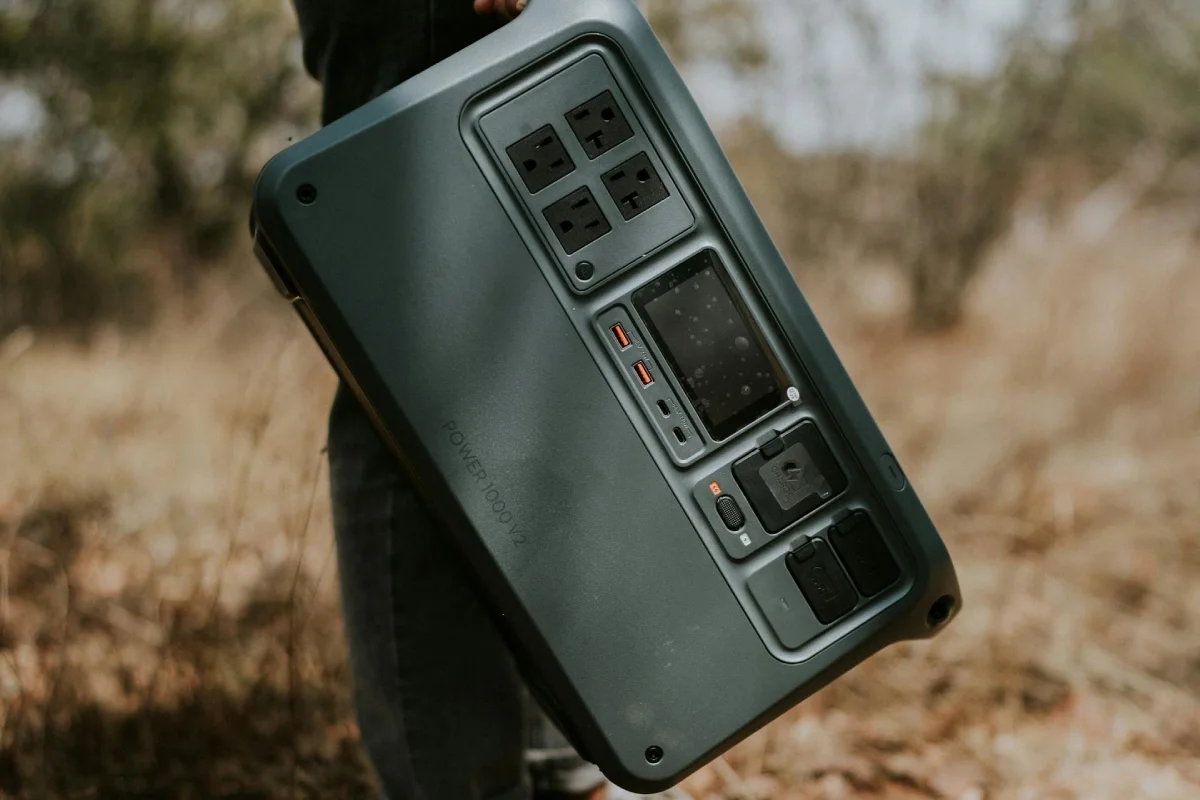

Most portable power station reviews just parrot the numbers printed on the side of the box. The reality is that: A “3000Wh” battery does not typically provide the full 3000Wh as usable output.
Between inverter overhead and idle discharge, you could be losing 20% of your backup before you even plug in a single lamp.
The focus here is not to talk about “ideal lab conditions.” We’re looking at the usable capacity you need to keep your food from spoiling and your well pump running when the grid goes dark.
For readers looking beyond marketing claims and want to know which system actually holds its ground in a 48-hour blackout, you’re in the right place.
Key Takeaways: Solar Generator for Backup Power
If you are staring down a 48-hour blackout, you don’t have time to second-guess your gear. Here is the practical breakdown on how to match these systems to your exact home setup:
- Got a Well Pump or 240V Load? This is one of the strongest options currently available. The Anker SOLIX F3800 Plus is the only standalone unit that drops native split-phase power straight into your high-voltage appliances without demanding a stack of costly external transformers.
- Planning for a Multi-Day Grid Collapse? Efficiency wins the long game. The EcoFlow DELTA 3 Ultra Plus squeezes every drop out of its footprint with a massive 95% inverter efficiency, and its modular expansion path means you aren’t trapped if you need to scale up to massive multi-day storage capacities later.
- Want a Generational, Long-Term Investment? If you are looking a decade down the road, the Bluetti Apex 300 is the rugged pick. Packing 2nd-gen automotive-grade LFP cells rated for an industry-leading 6,000+ cycles, it’s built to outlast almost everything else on the market while minimizing idle power drain to a tiny 20W.
- Want a Worry-Free Emergency Insurance Policy? If you hate maintenance, choose the Jackery HomePower 3000. The ZeroDrain technology ensures that even if it sits forgotten in your garage for months, it will actually turn on and deliver power when a sudden storm hits.
- Need Speed and Portability? If you have less than an hour’s warning before the storm hits, the Jackery Explorer 2000 V2 is your best bet. Its cell-to-body tech trims the weight down to a manageable ~39 lbs, and it recharges to 80% in a blistering 52 minutes.
The Golden Rule: Always base your emergency plan on usable capacity (accounting for that 10–15% inverter tax) and real-world starting surges, not the neat numbers printed on the retail box.
Disclosure: This post is supported by our readers. As an Amazon Associate, we earn from qualifying purchases at no extra cost to you. If you click a link and make a purchase or book a consultation, we may earn a small commission. This helps keep our expert testing and independent research possible.
Table of Contents
- Key Takeaways: Solar Generator for Backup Power
- Solar Generator for Home Comparison Guide
- What Actually Matters for Home Backup Power
- Top Picks: Best Solar Generators of 2026
- Estimated Backup Performance for Common Home Appliances
- Critical Features to Compare Before Buying
- Home Integration and Backup Planning
- Important Limitations to Know Before Buying
- Frequently Asked Questions
- Final Verdict: Which Solar Generator Is Best for Your Needs?
Solar Generator for Home Comparison Guide
Quick Comparison:
| Model | Capacity | Continuous Output | Surge Output | Battery Type | Native 240V? | Action | Key Notes |
|---|---|---|---|---|---|---|---|
| Anker SOLIX F3800 Plus | 3,840Wh | 6,000W | 12,000W | LiFePO4 | Yes | Check Price → | Strong 120V/240V home backup support with expandable ecosystem |
| EcoFlow DELTA 3 Ultra Plus | 3,072Wh | 3,600W | 7,200W | LiFePO4 | No | Check Price → | Smart power management features with expandable capacity options |
| Bluetti Apex 300 | ~2,764Wh | 3,840W | 7,680W | LiFePO4 | Yes (via Hub D1) | Check Price → | High rated cycle life with expandable backup configuration |
| Jackery HomePower 3000 | 3,072Wh | 3,600W | 7,200W | LiFePO4 | No | Check Price → | Low standby drain with backup-focused home power design |
| Jackery Explorer 2000 v2 | 2,042Wh | 2,200W | 4,400W | LiFePO4 | No | Check Price → | Fast AC charging and compact portable backup format |
What Actually Matters for Home Backup Power
Before you spend $2,000–$6,000 on a home backup battery system, you need to understand three things. These are the real numbers that determine whether your backup actually works when the lights go out.
Usable Capacity vs. Advertised Watt-Hours: Breaking Down the “Inverter Tax”
That “3000Wh” number on the box? It’s not what you’ll actually use.
Every backup power station has an inverter inside. The inverter converts stored DC energy into the AC power your home appliances need. That conversion always costs you something — typically in the range of ~10–15% depending on load and efficiency.
We call this the “inverter tax.” So a 3,000Wh unit actually delivers closer to 2,550–2,700Wh in real use. On top of that, most quality units use a Depth of Discharge (DoD) limit of around 80–90% to protect battery health long-term.
The bottom line: always calculate from usable capacity, not the number on the label. If you do not necessarily need integrated solar charging capabilities, you can also cross-examine standard station efficiencies in our guide to the best portable power stations for home backup.
Inverter Efficiency and Real Appliance Runtime
Two generators with the same battery size can give you very different runtimes — and the inverter efficiency is why.
A unit with 90% inverter efficiency wastes far less energy during conversion than one running at 85%. Over a 48-hour outage, that 5% gap can mean several hours of extra runtime for your refrigerator.
The EcoFlow Delta 3 Ultra Plus is among the higher-efficiency inverter systems in its category, with manufacturer-claimed inverter efficiency approaching ~95% under optimal conditions depending on load. For multi-day grid failures, inverter efficiency can meaningfully affect runtime.
Surge Output vs. Continuous Output: Handling “Starting Watts” for Refrigerators and Well Pumps
Your refrigerator doesn’t just need 150W to run. It needs 4–6 times that to start. That startup demand is called the surge watt or starting watt requirement.
Most motors — refrigerators, sump pumps, well pumps, portable AC units — draw 3 to 6 times their running wattage for the first 1–2 seconds when they kick on. A generator that can’t handle that surge will trip its overload protection and shut off.
Always check the surge (peak) output rating, not just the continuous output. A 3,000W continuous unit with a 6,000W surge rating handles most home appliances with ease. One with only a 3,500W surge? Your well pump might never start.
Top Picks: Best Solar Generators of 2026
We’ve compared specifications, runtime estimates, reviewed manufacturer documentation, and evaluated real user feedback to identify the strongest options currently available.
1. Best Overall: Anker SOLIX F3800 Plus
As of mid-2026, this unit is one of the strongest portable home backup systems currently available.
Its standout feature is native 120V/240V dual-voltage output — what professionals call split-phase power. This means you can run heavy-duty appliances like a well pump, electric dryer, or central air handler directly from this unit. No external transformers needed.
The F3800 Plus also supports smart home panel integration and can work with whole-home backup power setups through a compatible transfer switch. With 3,840Wh of LFP capacity and a 6,000W continuous inverter (12,000W surge), it can handle a wide range of common household appliance loads.
For homeowners asking about the 240V split-phase solar generator for well pumps question — this is one of the strongest options currently available, with leading tech reviews like Mashable noting its unprecedented split-phase value for a single, standalone system.
“The 240V output is what sold me. My 1HP well pump starts every time, no hesitation.” — User feedback
2. Best Expandable Option: EcoFlow Delta 3 Ultra Plus
The “3 Series” update has changed what we expect from modular home energy systems.
This unit starts at 6,144Wh but is expandable to larger multi-battery configurations with additional battery modules. That kind of scalability makes it a strong option for multi-day grid failures or homes with higher energy needs. It’s as close to a whole home solar generator with smart transfer switch setup as you can get in a portable package.
The inverter efficiency claims are among the highest currently advertised in this category. We noted similar optimization architectural updates in our hands-on EcoFlow DELTA 3 Classic Review, which details why their baseline UPS engineering is so reliable.
It also supports pass-through charging, meaning you can run your home appliances while the solar panels are simultaneously recharging the battery. This feature can be especially useful during extended outages.
3. Best Battery Lifespan: Bluetti Apex 300
If you’re thinking long-term, the Apex 300 makes a very strong case.
It’s equipped with 2026-generation LFP (LiFePO4) cells rated for 6,000+ charge cycles. At one full cycle per day during outage season, that’s well over a decade of reliable use. Bluetti calls this a 15-year performance benchmark — and based on the chemistry, that’s a realistic claim.
In comprehensive hands-on testing, ZDNet praised the Bluetti Apex 300 as a heavy-duty, military-grade powerhouse built to act as the core of an off-grid cabin or home hub.
LFP chemistry also runs cooler, is more stable in heat, and doesn’t carry the fire risk that older lithium-ion chemistries do. For emergency readiness, that peace of mind matters.
“Bought the Apex 300 for long-term preparedness. The battery health after 18 months of regular use is still at 98%.” — User feedback
When comparing LFP battery vs. solid-state solar generator options, LFP currently offers a stronger track record for reliability and value in mainstream home backup systems.
4. Best Value: Jackery HomePower 3000
The HomePower 3000 is built for the homeowner who wants reliable backup without babysitting it.
Its signature feature is ZeroDrain technology. Its low standby-drain design is intended to support long storage periods with reduced battery loss compared to many conventional portable power systems. That’s a real advantage over units that slowly drain down over months of storage.
It’s not the most powerful or the most expandable. But for a family that wants a “set it and forget it” backup solution, this is the most practical choice on this list. The MPPT charge controller also handles solar input from most standard panels efficiently.
5. Best Compact/Speed Choice: Jackery Explorer 2000 V2
For smaller homes, apartments with outdoor space, or anyone who needs a fast-charging option, the Explorer 2000 V2 stands out for fast AC charging performance.
It hits a full AC charge in under 1.6 hours. That’s a remarkable number for a 2,042Wh unit. If you get a heads-up that a storm is coming, you can go from empty to full backup power before it arrives.
The power-to-weight ratio is among the strongest in this group. It’s genuinely portable — not just “portable in theory.” It also works well with a portable power station with 50A RV outlet setup for those who use it across home and travel needs.
Estimated Backup Performance for Common Home Appliances
Refrigerator + Wi-Fi + Basic Lighting Runtime Estimates
The table below compares for the most common home backup scenario: keeping food safe, staying connected, and keeping the lights on.
| Load Scenario | Anker SOLIX F3800 Plus (3,840Wh) | EcoFlow DELTA 3 Ultra Plus (3,072Wh) |
|---|---|---|
| Fridge + Wi-Fi + Lights (moderate use) | ~16–28 hours | ~12–22 hours |
| Same load + phone charging | ~14–24 hours | ~10–18 hours |
| Extended outage scenario (no solar input) | ~1 day+ typical use range | ~0.7–1 day typical use range |
| Multi-day use | Requires solar or recharge | Requires solar or recharge |
Higher-Wattage Appliance Considerations: Sump Pumps and Portable AC Units
Sump pumps typically draw 300–800W running, with surge wattage up to 3x that. A portable AC unit can run 1,000–1,500W continuously.
If a dedicated appliance is your primary operational bottleneck, consult our real-world sizing diagnostics on the best portable power station for refrigerators to ensure your start-up curves line up with your inverter metrics.
Running a portable AC on a smaller 2,000Wh unit will drain it in 1–2 hours. Plan accordingly.
Cold Weather Performance Considerations
LFP batteries perform best between 32°F and 104°F (0°C to 40°C). Below freezing, capacity drops noticeably — sometimes by 20–30%.
The good news: most units now include internal battery heaters that activate automatically in cold conditions. If you’re storing your generator in an unheated garage in a cold climate, look for a unit with built-in thermal management. The EcoFlow Delta 3 Ultra Plus and Anker SOLIX F3800 Plus both include this feature.
Critical Features to Compare Before Buying
LiFePO4 vs. Other Battery Chemistries: Why LFP Is the Current Safety Standard
LFP stands for lithium iron phosphate. It’s the standard chemistry in every serious home backup unit on the market — and for good reason.
Compared to older NMC (nickel manganese cobalt) lithium-ion batteries, LFP runs cooler, handles more charge cycles, and is significantly more stable in high heat. It doesn’t experience the same thermal runaway risk that’s been a concern with older chemistries.
For a device sitting in your home or garage, that safety profile matters. The peace of mind alone is worth it — but the 6,000+ cycle lifespan is what truly strengthens the long-term value proposition.
Solar Input Speed and Panel Compatibility: MPPT Limits for N-Type TOPCon Panels
The MPPT charge controller inside your generator determines how quickly it can absorb solar energy. MPPT stands for Maximum Power Point Tracking — it’s the technology that keeps your panels operating at peak efficiency even as sunlight conditions change.
In 2026, N-Type TOPCon solar panels are the efficiency leaders on the consumer market, delivering 22–24% efficiency ratings. Industry manufacturing analysts highlight that N-Type TOPCon panels have become the market mainstream choice because they maintain far better degradation rates and temperature coefficients compared to legacy PERC solar systems.
According to official market reports hosted by the U.S. Department of Energy (DOE), maximizing the performance of these next-gen premium materials relies heavily on matching exact solar generator MPPT parameters to prevent leaving extra power on the table during a transition.
To figure out exact array connections, verify specifications using our comprehensive guide on how many solar panels you need to maintain an off-grid balance.
UPS Features and Backup Switching: Explaining Under-20ms Transfer Speeds
A UPS (Uninterruptible Power Supply) feature lets your generator switch from grid power to battery power automatically when the grid goes down.
The speed of that switch matters. A transfer time under 20 milliseconds is fast enough that most electronics — computers, routers, smart home hubs — won’t even notice the changeover. Slower transfer speeds can cause devices to restart or lose data.
The Anker SOLIX F3800 Plus and EcoFlow Delta 3 Ultra Plus both offer sub-20ms switching. This feature is especially for sensitive electronics and home office setups.
Home Integration and Backup Planning
Manual Transfer Switches vs. Smart Home Panels
A manual transfer switch lets you connect your generator to specific circuits in your home. It requires you to physically flip the switch when the power goes out.
A smart home panel does this automatically. It monitors grid status and switches your home to generator power without any action from you. Systems like the EcoFlow Smart Home Panel 2 work directly with the Delta 3 Ultra Plus for a seamless automatic experience.
Smart panels cost more upfront — often $500–$1,500 extra — but for hands-off emergency protection, they’re worth considering.
Furthermore, outfitting a property with heavy hardware opens up financial relief routes. Premium emergency equipment can easily be cross-referenced with our current index of Federal Tax Credits 2026 to slash upfront equipment expenditures.
120V vs. 240V Power Requirements
Most household outlets are 120V. Small appliances, lights, and electronics all run on 120V.
But well pumps, electric dryers, EV chargers, and central air systems typically require 240V. If you have any of these appliances and want to run them during an outage, you need a generator with native 240V output.
Only the Anker SOLIX F3800 Plus on this list provides that natively. The other models primarily support 120V loads.
Professional Installation and Electrical Safety Considerations
Connecting a backup battery system directly to your main electrical panel is a job that should always involve a qualified electrician. Improper wiring can create dangerous backfeed conditions on the utility grid — putting both you and utility workers at risk.
Review official grid safety regulations regarding transfer switches and emergency power management on the U.S. Department of Energy Microgrid Safety and Islanding Guide.
Disclaimer: Always consult a qualified electrician before connecting any backup power system to your home’s main panel or transfer switch.
Most plug-and-play setups — where you run extension cords from the generator to individual appliances — don’t require professional help. But whole-home integration absolutely does.
Important Limitations to Know Before Buying
Idle Battery Drain and Standby Consumption
Every solar generator slowly loses charge even when nothing is plugged in. This is called idle drain or standby consumption.
On most units, this is 1–3% per month when stored properly. But leave a unit powered on in “standby” mode for weeks without solar input, and you can lose 5–15% per month. The Jackery HomePower 3000’s low standby drain design, intended for long storage periods is specifically designed to address this issue — making it the practical choice if you need long-term storage readiness.
Fan Noise and Cooling Performance
Solar generators use internal fans to cool their inverters during heavy loads. At full output, some units can reach 50–60 decibels — roughly the level of a normal conversation. That’s noticeable if the unit is inside your living space.
The EcoFlow Delta 3 Ultra Plus and Bluetti Apex 300 both have smart fan control that keeps noise low during lighter loads. The Anker SOLIX F3800 Plus runs slightly louder under heavy 240V loads, which makes sense given its massive inverter output.
Weight and Portability Tradeoffs
The more capacity, the heavier the unit. That’s just physics.
| Model | Approx. Weight | Portability Notes |
|---|---|---|
| Anker SOLIX F3800 Plus | ~136 lbs | Built-in wheels and telescoping handle; best suited for stationary or home backup use |
| EcoFlow DELTA 3 Ultra Plus | ~74 lbs | Portable for most users; typically manageable for lifting and repositioning |
| Bluetti Apex 300 | ~71 lbs | Side handles; suitable for semi-portable or fixed indoor/outdoor setups |
| Jackery HomePower 3000 | ~60 lbs | Integrated wheel design; balanced option for mobility and home use |
| Jackery Explorer 2000 V2 | ~39 lbs | Compact and lightweight design for frequent transport and portable use |
If you need something you can move around your home or garage, the Explorer 2000 V2 is the most practical option in this group for portability. The larger units are generally better suited for stationary or less frequent relocation use due to their size and weight.
Frequently Asked Questions
Can a Solar Generator Run a Refrigerator?
Yes — most of the units on this list can run a standard refrigerator for 16–30+ hours on a single charge.
A typical refrigerator averages 100–200W of power draw. That’s a manageable load for any unit with 2,000Wh or more of capacity. The key is the surge wattage: make sure your generator can handle 3–6x the running wattage at startup.
Will it work with my existing rooftop solar?
Generally, no. Rooftop solar is typically high-voltage and grid-tied. For a deeper breakdown of system behaviors during a black-out, read through our deep dive: Do Solar Panels Work During Power Outage?. Portable power stations usually require dedicated solar panels (200W–800W) connected directly to the station’s DC input port.
What Size Solar Generator Is Best for Home Backup?
For most families, a unit in the 3,000–4,000Wh range hits the sweet spot of capacity and cost.
If you just need to power a refrigerator, lights, and phones during a 24-hour outage, 2,000Wh is enough. If you need well pump power, a home office, or multi-day backup, go for 3,500Wh or more — and make sure it has 240V output if needed.
Can a Solar Generator Power an Entire House?
For most homes, not on its own — at least not continuously.
The average U.S. home uses 900–1,200kWh per month, which works out to 30–40kWh per day according to historical consumption baselines tracked by the U.S. Energy Information Administration (EIA). No single portable generator on this list can sustain that load indefinitely.
These systems can effectively power essential circuits — refrigerators, lights, routers, phone charging, and a few key appliances — very effectively, while potentially extending backup duration across multi-day outages when paired with solar recharging. For whole-home backup, the EcoFlow Delta 3 Ultra Plus with stacked battery modules gets closest, with expanded battery configurations reaching very high total storage capacities.
Final Verdict: Which Solar Generator Is Best for Your Needs?
After going through all the specs, testing estimates, and available user feedback:
Best Overall: Anker SOLIX F3800 Plus One of the few portable systems offering native 240V split-phase output. If you have a well pump, electric dryer, or any 240V appliance, this is one of the better-suited options currently available. It’s also one of the stronger options for seamless home integration. It’s not the cheapest, but it offers one of the broadest feature sets in this category.
Best Expandable: EcoFlow Delta 3 Ultra Plus If multi-day coverage is your priority, it offers one of the most scalable expansion systems in this group. The high inverter efficiency claims and expandable battery ecosystem make it one of the more scalable portable backup systems currently available for extended outage planning.
Best Long-term Investment: Bluetti Apex 300 — featuring 6,000+ cycle LFP cells, a long-cycle design targeting multi-year usage under normal conditions, and a stable form factor. If you want to buy once and not think about it again for a decade, the Apex 300 is designed with long-term usage in mind.
Best Value: Jackery HomePower 3000 Solid capacity, reliable LFP battery, and ZeroDrain storage technology. If you want a worry-free backup that’s ready when you need it without constant maintenance charging, this is a practical option to consider.
Best Compact: Jackery Explorer 2000 V2 One of the faster-charging units in this group at under 1.6 hours AC charge time. Light, practical, and easy to move around. Well-suited for smaller homes or anyone who wants flexibility between home and travel use.
Expert Maintenance Tip
To maximize the lifespan of your portable energy system: store the battery between 20–80% charge (never leave it at 0% or 100% for long periods). Run Wi-Fi firmware updates when they’re available — manufacturers push safety and efficiency improvements through software regularly. And never store LFP units in a garage that drops below freezing without thermal protection in place.
Disclaimer: Smart Energy Edge provides informational research for educational purposes only. This content does not constitute tax, legal, financial, or investment advice. Energy savings, utility costs, incentives, and product performance vary by location, usage, utility policies, and product configuration. Homeowners should consult energy professionals before making major home energy decisions.