
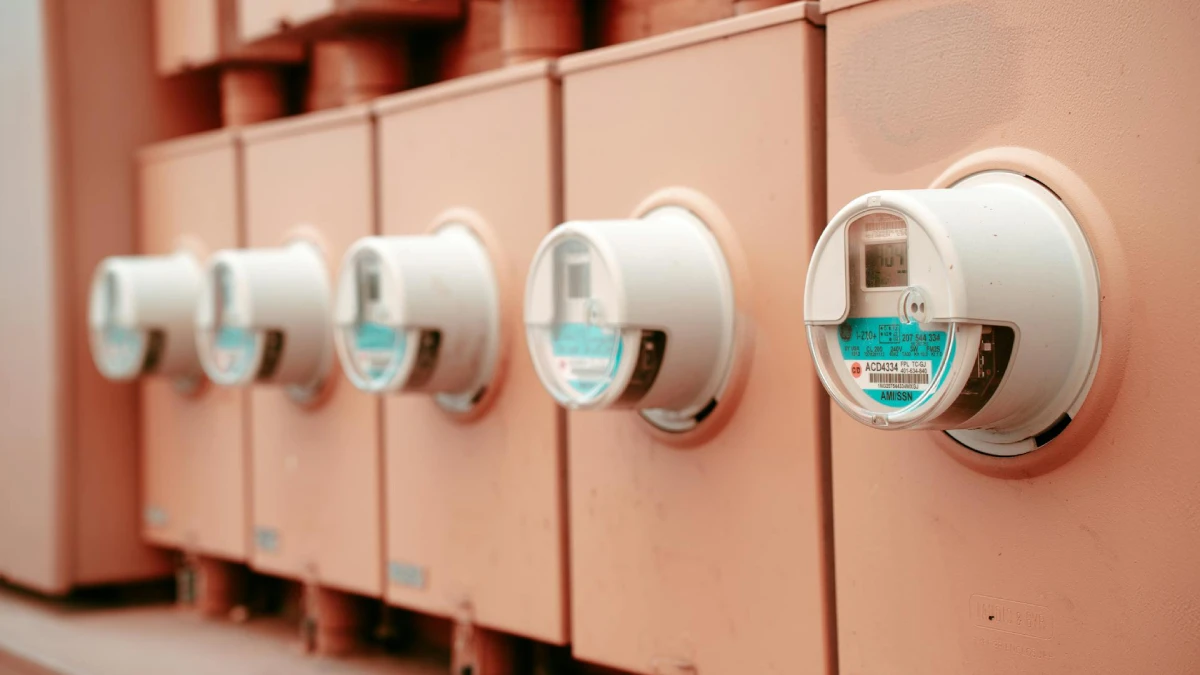

You’re likely looking for the “light switch” to lower your bill. But the real culprits are invisible.
Most homeowners aren’t wasting power because they’re careless. They’re losing money because their biggest appliances are ‘leaking’ energy in ways they can’t see.
The average American household spent around $1,650 on electricity in 2025. That number keeps climbing. Regional spikes and a 9.5% rate hike in early 2026 mean many families are now crossing the $2,000 threshold for the first time, according to the U.S. Energy Information Administration.
But here’s the thing: Almost 70% of that bill comes from just three sources. Fixing those three areas may help significantly reduce electricity costs depending on your home, climate, and utility rates. Ignoring them means simple changes like turning off lights alone are unlikely to have a major impact.
Let’s break down exactly what’s draining your wallet—and how this connects to the bigger picture of why electricity bills are rising across the U.S. right now.
Disclosure: This post is supported by our readers. As an Amazon Associate, we earn from qualifying purchases at no extra cost to you. If you click a link and make a purchase or book a consultation, we may earn a small commission. This helps keep our expert testing and independent research possible.
What Appliances Use the Most Electricity? (Quick Answer)
Your bill is mostly driven by HVAC, water heating, and major appliances like your refrigerator and washer/dryer. These three categories make up about 70% of total home electricity use, according to 2026 EIA data.
Everything else — your TV, laptop, phone charger — is the remaining 30%. It’s not nothing, but it’s not your problem.
Key Takeaways
Focus here first:
- HVAC (heating and cooling): ~47% of your bill
- Water heating: ~14% of your bill
- Major appliances (fridge, washer, dryer): ~13% of your bill
That’s 74% right there. If you want real savings, that’s the target. Let’s break each one down.
When looking at your home electricity usage breakdown, don’t just focus on the lights. Your baseload power requirements are often inflated by phantom loads from older electronics. By checking the Energy Star efficiency rating of your ‘Big 3’ appliances, you can significantly lower your kWh consumption during peak demand hours.
Table of Contents
- What Appliances Use the Most Electricity? (Quick Answer)
- The Biggest Electricity Users in a Home
- Secondary Power Users: Noticeable but Lower Impact
- Table: Home Electricity Usage Breakdown
- Why Your Home Uses More Electricity Than Average
- How to Reduce Electricity Usage at Home
- The Smart Home Energy Monitor Trick
- Seasonality: Why Bills Spike in Summer and Winter
- Frequently Asked Questions
The Biggest Electricity Users in a Home
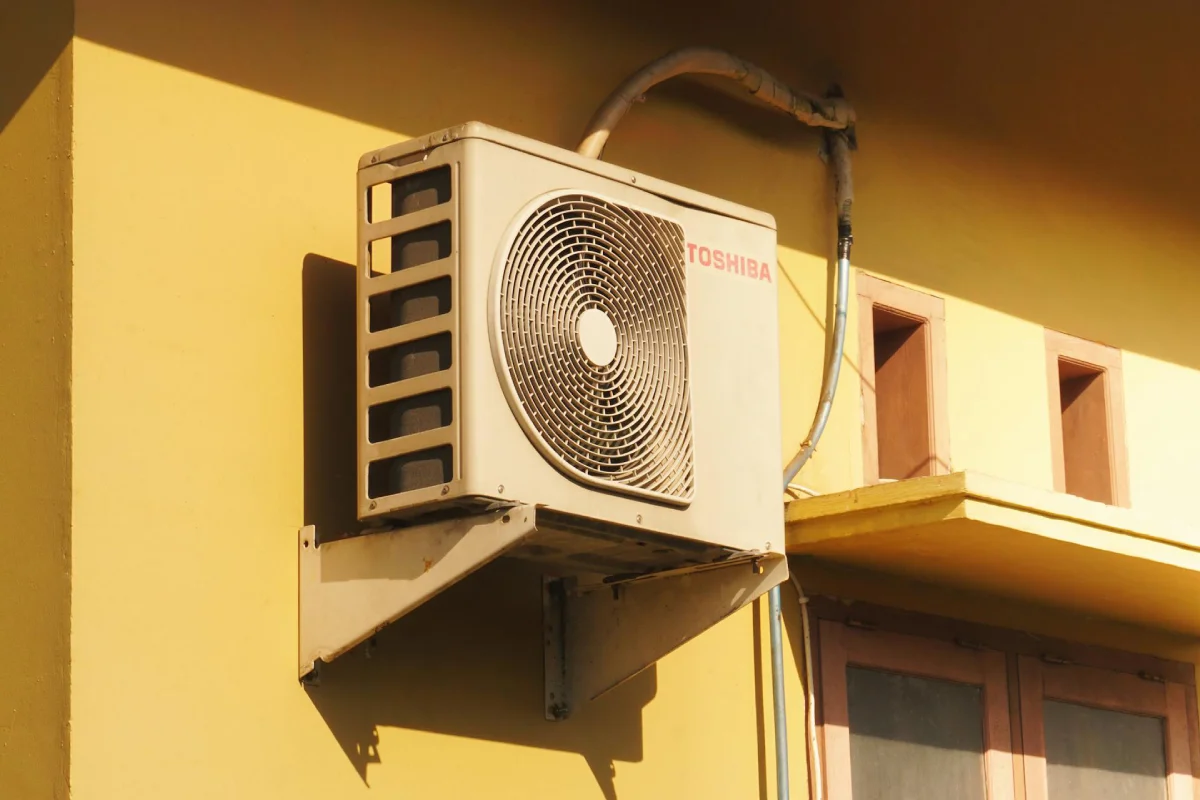
HVAC (Heating and Cooling) — The 47% Giant
Your heating and cooling system is the single largest source of electricity use in most homes. It’s not even close.
In most American homes, HVAC accounts for roughly 47 cents of every dollar you spend on electricity. If you’re tired of guessing how much your AC is costing you, we break down how much a smart thermostat actually saves on electric bills based on real-world testing.
The reason is simple: it runs a powerful motor for hours every day. In summer, your AC might run 8–12 hours. In winter, a heat pump runs just as long.
Central air conditioning systems typically draw 3,000–5,000 watts. Run that for 10 hours and you’re burning 30–50 kWh in a single day. At the current average US rate of $0.18/kWh, that’s up to $9.00 per day — just for cooling.
Here’s what most people miss: it’s not usually the AC itself that’s the problem. It’s how hard the AC has to work. A poorly insulated attic or a leaky door seal forces your system to run longer. In field observations from residential energy assessments, AC systems are sometimes found cycling nonstop during hot afternoons — not because it was hot out, but because cooled air was escaping through gaps around the windows.
A well-maintained, properly sized HVAC system in an efficient home might account for 35% of your bill. A neglected one in a drafty house? Easily 55–60%.
The fix: Set your thermostat to 78°F in summer and 68°F in winter as a starting point—or go deeper into how much a smart thermostat actually saves on electric bills if you want automation doing this for you. Every degree above 78°F may help reduce cooling costs, although actual savings depend on climate, insulation, and HVAC system efficiency. Also, change your air filter every 90 days. A clogged filter makes your system work harder for no reason.
Water Heating — The Silent 14% Daily Draw
This one surprises a lot of homeowners. Your water heater runs every single day — often multiple times — and most people never think about it.
A standard electric tank water heater holds 40–50 gallons. It heats that water to around 120°F and then works constantly to keep it there. That constant “re-heating” cycle is what drives up your bill. Even when nobody is showering, the tank is losing heat through its walls and kicking back on.
This process falls under what energy pros call baseload power requirements — the electricity your home needs just to exist, even before anyone touches a switch.
The average water heater uses about 4,000 watts when running. According to Department of Energy benchmarks, these units typically run 3–4 hours per day. That’s 12–16 kWh daily. Over a month, you’re looking at 360–480 kWh — just for hot water.
The fix: Lower your thermostat to 120°F. Better yet, consider a heat pump water heater. They can use significantly less electricity than standard electric resistance models and may qualify for available federal or local incentive programs depending on installation timing and eligibility. If you’re stacking efficiency upgrades, it’s also worth understanding whether solar panels are worth it under the new ROI rules before making larger investments.
The Major Appliance Load (Refrigeration & Laundry)
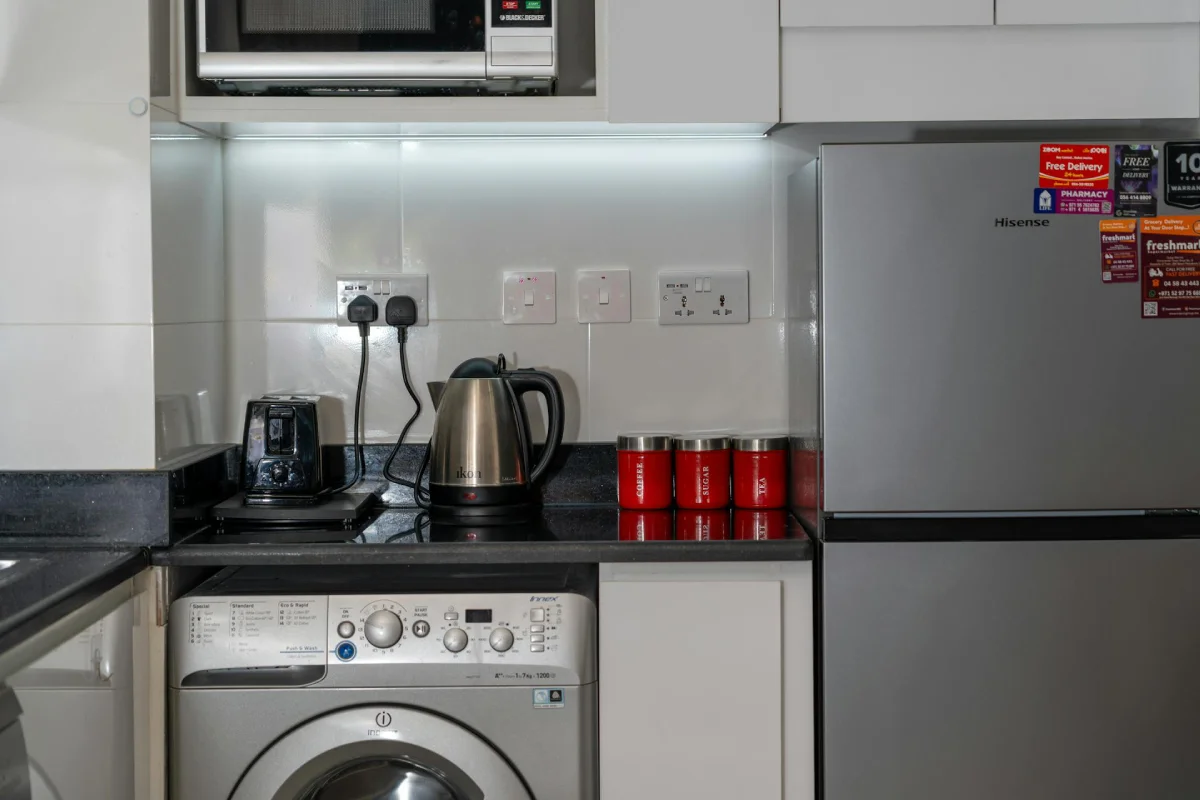
Your refrigerator and laundry pair together make up about 13% of your bill. Neither one is a crisis on its own, but they run constantly or use a lot of heat — which adds up.
Your refrigerator is on 24/7. If you’re trying to optimize backup or emergency scenarios, here’s a detailed breakdown of the best portable power station for running a refrigerator efficiently. A standard model uses 100–200 watts while the compressor is running. Even with cycling, you’re looking at 800–1,200 kWh annually. An older fridge might use double the power of a modern ENERGY STAR model, which typically stays under 600 kWh annually. It continuously adds to household electricity usage throughout the day.
Your dryer is the real laundry bill driver. Electric dryers pull a massive 5,000–6,000 watts while running. One load equals roughly 5 kWh. If you run the dryer just 7 times a week, you’re spending about $25 per month just on drying clothes.
The fix: Keep your fridge coils clean (once a year). Don’t overfill it — good airflow helps it run efficiently. For laundry, always wash in cold water. According to the U.S. Department of Energy, heating water for a wash cycle adds energy for no good reason. And clean your dryer lint trap every single time.
Secondary Power Users: Noticeable but Lower Impact
Lighting and Electronics
LED lighting has changed this category dramatically. A modern LED bulb uses 8–10 watts compared to the 60 watts an old incandescent burned. According to the U.S. Energy Information Administration (EIA), lighting now accounts for only about 5–7% of the average home’s electricity use.
Electronics — TVs, gaming consoles, computers — add another 5–7%. A high-end gaming PC running for 4 hours uses about 1.5 kWh. That’s real money, but it’s manageable.
Cooking Appliances
Your electric oven uses around 2,000–2,400 watts. An hour of oven cooking runs about 2–2.4 kWh. This adds up if you cook daily. An air fryer uses half the wattage and preheats in minutes — worth considering if you cook frequently.
Hidden Electricity Users (Vampire Power)
This is where we see homeowners lose $100–$150 per year without realizing it. Every device that has a clock, remote control, or standby mode draws power even when “off.” This is called phantom load.
Your cable box. Your gaming console. Your TV. Your microwave’s clock. Your charger plugged into the wall with nothing attached. Each one draws 1–10 watts. Alone, each is nothing. According to research from the National Renewable Energy Laboratory (NREL), together across 20–30 devices, they can cost you $150–$200 per year. That’s real money for doing exactly nothing.
The fix: Plug entertainment systems into smart power strips. When the TV turns off, the strip cuts power to everything connected. It takes only a few minutes to set up and may help reduce standby electricity usage over time.
Table: Home Electricity Usage Breakdown
| Category | Impact Level | Share of Usage | The “Why” |
|---|---|---|---|
| HVAC | CRITICAL | ~47% | Massive motors + longest runtimes |
| Water Heating | HIGH | ~14% | Constant “re-heating” cycles 24/7 |
| Major Appliances | MEDIUM | ~13% | High-torque motors and heat elements |
| Lighting/Kitchen | LOW | ~12% | LEDs have made this a minor factor |
| Electronics/Misc | LOW | ~14% | Many small devices (“Death by 1,000 cuts”) |
Why Your Home Uses More Electricity Than Average
The Insulation Factor: Why Your AC Is Working Double-Time
Poor insulation is one of the most common high electricity bill causes we find in homes. If your attic insulation is thin or your walls aren’t properly sealed, your HVAC has to run longer to hit your target temperature.
The Department of Energy estimates that heating and cooling accounts for 43% of the average utility bill — but in older, under-insulated homes, that number climbs significantly higher. We’ve audited homes where the attic was losing conditioned air at the same rate the AC was producing it.
According to Energy Star, adding attic insulation to R-38 or R-49 (depending on your climate zone) can cut heating and cooling costs by 15–20%. In many homes, this can be one of the more cost-effective energy-efficiency upgrades.
Air Leaks and Envelope Failures
Air sealing is free, or close to it. A can of foam sealant costs $10. Yet most homeowners skip it entirely.
Common leak spots: around electrical outlets on exterior walls, around plumbing penetrations in the floor, where the wall meets the attic floor, and around recessed light fixtures.
According to Energy Star, sealing these air leaks and adding insulation can save you an average of 15% on heating and cooling costs. Thermal cameras can help identify hidden air leaks and insulation problems during energy audits. Many homeowners underestimate how much conditioned air can escape through small unnoticed gaps.
Occupancy, Behavior, Old Appliances, and Weather
A 4-person household uses more electricity than a 2-person one — obviously. But it’s not just headcount. Habits matter: long showers, drying clothes in the dryer instead of air-drying, leaving doors open while the AC runs.
Old appliances are a hidden cost. Appliances from the early 2000s often use 30–50% more electricity than modern equivalents. A refrigerator, dishwasher, or washer that’s 15+ years old is quietly costing you money every month.
Weather is the wildcard. The “heat dome” pattern — prolonged stretches above 100°F across the South and Southwest — has pushed AC runtimes to record highs. If your summer bill looks brutal, it’s probably not just you. But a well-insulated home handles it much better than a drafty one.
How to Reduce Electricity Usage at Home
The “Big 3” Strategy
Start where 70% of the money is.
For HVAC:
- Get a Smart Thermostat: Nest and Ecobee learn your schedule and stop cooling an empty house. Potential Savings: $100–$150/year.
- Schedule an HVAC tune-up every year. A dirty coil or low refrigerant makes the system run longer.
- Seal the Ducts: According to ENERGY STAR, up to 30% of conditioned air can leak through duct joints. Sealing these is the “hidden” fix for a high bill.
For water heating:
- Set your water heater to 120°F today. Takes two minutes.
- Install low-flow showerheads. Less hot water used means less heating needed.
- Upgrade to a Heat Pump Water Heater: If your unit is 10+ years old, switching to a heat pump model may significantly reduce long-term operating costs, especially when combined with available incentives.
Quick Wins With High ROI
- Replace any remaining incandescent or CFL bulbs with LEDs.
- Wash all laundry in cold water. Modern detergents are designed for cold — it works just as well.
- Use smart power strips for TV and gaming setups.
- Run dishwashers and laundry machines at night (more on why in a moment).
- Clean your dryer’s exhaust vent annually. A clogged vent makes drying take twice as long.
Real-Life Practicality
We’re not going to tell you to stop using your AC or take cold showers. That’s not sustainable.
The goal is optimization, not deprivation. Small, consistent changes to how your biggest systems run will outperform any amount of turning off phone chargers. Focus on systems, not habits.
The Smart Home Energy Monitor Trick
“X-Ray” Vision for Your Energy Use
Here’s something we wish every homeowner knew: you can monitor estimated electricity usage from major circuits and appliances in near real time, from your phone.
Smart home energy monitors like Emporia and Shelly connect to your breaker panel and give you a live breakdown of your electricity use. They identify individual appliances — your dishwasher, your dryer, your AC compressor — and show you precisely how much each one costs.
Once you identify your biggest loads, you can even shift them strategically using solutions like the best portable power stations for home backup and peak-hour savings.
What Monitoring Reveals
In our experience, homeowners who install an energy monitor find at least one surprise within the first week. Common ones:
- A second refrigerator in the garage running at twice the expected wattage
- A hot tub heating on a schedule nobody knew about
- An old chest freezer drawing 800 watts instead of the expected 300
Without a monitor, these are invisible. With one, they’re obvious.
Recommended Energy Saving Tools
These are the top-rated products for monitoring and reducing home power consumption.
Emporia Vue Gen 3 Home Energy Monitor
The most accurate way to see your real-time electricity usage. It connects directly to your circuit panel to show you exactly what each appliance is costing you.
- Key Benefit: Identifies “hidden” energy waste immediately.
- Target Savings: $200–$300 per year.
Ecobee Smart Thermostat Premium
A high-quality smart thermostat that adjusts your HVAC system based on whether you are actually in the room.
- Key Benefit: Includes a built-in air quality monitor and remote sensors.
- Target Savings: Up to 23% on heating and cooling.
Some homeowners may recover the cost over time through reduced energy waste, depending on usage patterns and local electricity prices. One quick look at the app usually reveals enough “waste” to pay for the device itself.
If you’re exploring backup power alongside monitoring, see the full EcoFlow DELTA 3 Classic review with real-world testing and performance insights.
Seasonality: Why Bills Spike in Summer and Winter
Peak Demand Pricing
This is something a lot of utility customers don’t know: not all electricity costs the same.
Many utilities now use peak demand vs. off-peak hours pricing — also called time-of-use rates. Electricity costs more during high-demand windows, typically 4 PM to 9 PM on weekdays. Running your dishwasher or dryer at 5 PM could cost 2–3 times more than running it at midnight.
Check whether your utility offers time-of-use rates. If they do, shifting your laundry and dishwasher to off-peak hours can save $10–$30 per month with zero effort.
AC Usage and the Heat Dome Effect
Summer cooling bills are the biggest seasonal driver for most Americans. AC systems that were sized for historical average temperatures are being pushed beyond their design limits during recent heat events. This is also why many homeowners are now asking whether solar panels actually work during power outages and extreme grid conditions.
When outdoor temperatures hit 105°F+, your AC runs nearly continuously. It can’t “catch up.” This extended runtime drives both energy use and wear on the system.
The best protection is a well-insulated, well-sealed home envelope. A house that holds temperature well doesn’t need the AC to cycle on constantly — even in extreme heat. Combined with a programmable thermostat set slightly higher during peak heat windows, you can manage summer bills even in harsh conditions.
Disclaimer: Smart Energy Edge provides informational research for educational purposes only. This content does not constitute tax, legal, financial, or investment advice. Energy savings, utility costs, incentives, and product performance vary by location, usage, utility policies, and product configuration. Homeowners should consult energy professionals before making major home energy decisions.
Frequently Asked Questions
What is the single most expensive appliance to run in a home?
In most homes, it’s the HVAC system—particularly central air conditioning in summer. Because it draws 3,000–5,000 watts and can run for 10+ hours a day, it is far more expensive than anything else in the house. Focus on this giant first if you want to see real savings.
Why is my electric bill so high when I’m not home much?
Your biggest electricity users — HVAC, water heater, refrigerator — run whether you’re home or not. Your water heater re-heats constantly. Your fridge never turns off. And if your HVAC is programmed to maintain temperature all day, it runs even in an empty house. A smart thermostat with away scheduling fixes this quickly.
Does unplugging chargers really save electricity?
Only marginally. A phone charger with nothing attached draws about 0.1–0.5 watts. Unplugging 10 of them saves maybe $2–$3 per year. It’s not nothing, but it’s not where your money is going. Focus on your HVAC and water heater first.
What uses the most electricity in a home during winter?
In homes with electric heat, the heating system dominates just as the AC does in summer — often accounting for 50%+ of the bill. Electric resistance heaters and older heat pumps are the biggest winter consumers. Water heating becomes the second-biggest draw.
How do I find out what’s using the most power in my home?
The fastest way is a smart energy monitor like Emporia Vue or Shelly. They plug into your breaker panel and show real-time usage by device or circuit. A plug-in watt meter (like the Kill A Watt, ~$20) is a cheap way to test individual appliances before you commit to a whole-home monitor.
Can I realistically cut my electric bill by 30%?
Yes — and we’ve seen it happen consistently. The formula is: smart thermostat + HVAC maintenance + water heater adjustment + phantom load elimination. Together, these changes may significantly reduce electricity costs over time. No lifestyle sacrifice required.